
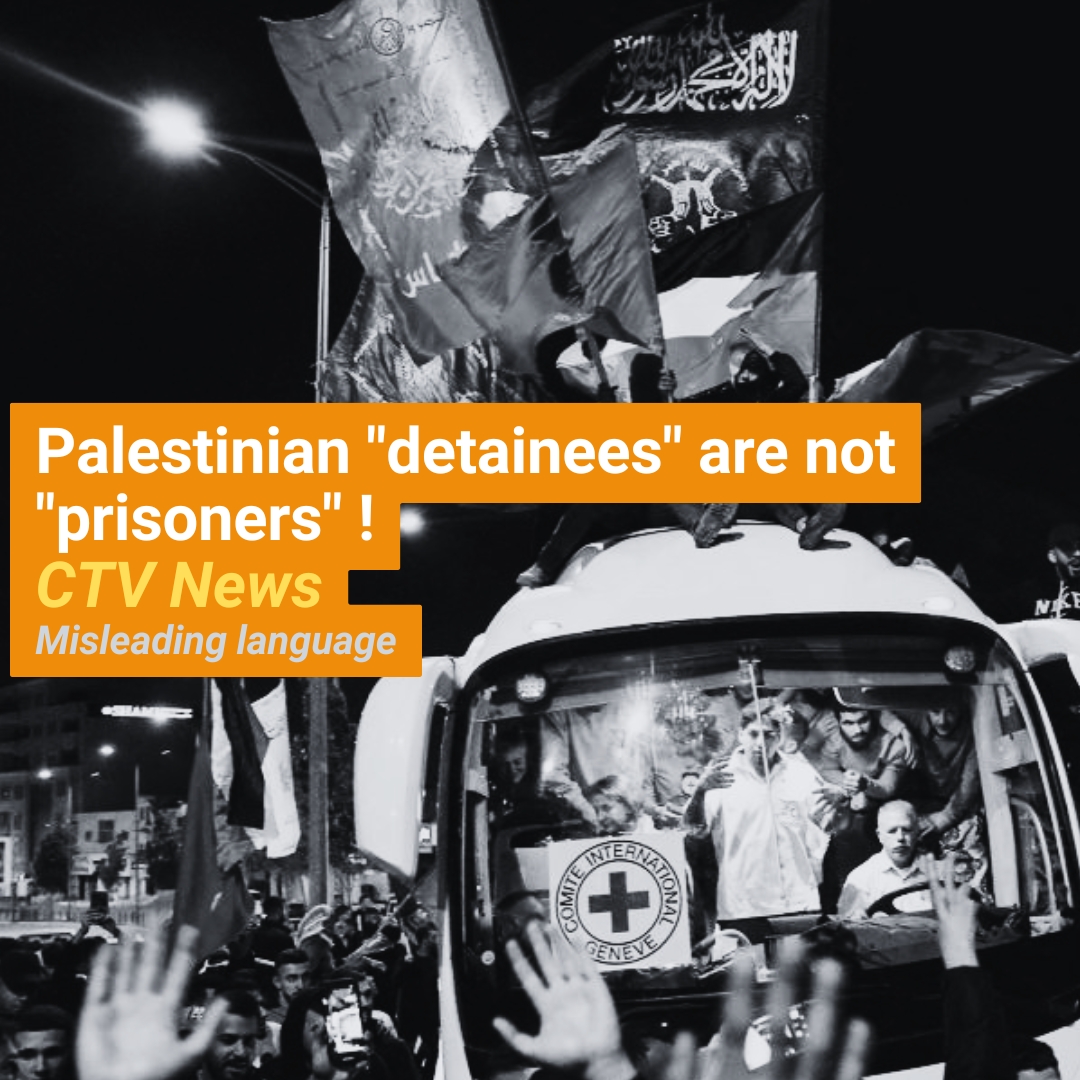
"The term “prisoner” suggests a conviction following a fair trial—yet thousands of Palestinians, including children, activists, and journalists, are held without charge or legal recourse. Furthermore, calling Palestinian detainees “prisoners” erases the illegality of their detention and implies guilt where none has been proven."
 July 8, 2025
To the CTV Newsroom,
I am writing on behalf of Canadians for Justice and Peace in the Middle East (www.cjpme.org) regarding your news segment that aired on Monday, July 7, 2025.
In the segment, it was stated:
“Hamas has expressed support for the framework of the deal, but it says there are amendments it wants before accepting. Under the current proposal, Hamas would release 10 living hostages, with Israel releasing Palestinian prisoners.”
The Media Accountability team at CJPME is mainly concerned about unbalanced coverage of events in the Middle East, particularly regarding Palestine in light of Israel’s genocidal campaign against Palestinians since October 7, 2023. We are also troubled by the media’s use of misleading language, such as describing the occupied Palestinian territories as “disputed” rather than occupied. One of the more insidious ways this problem also manifests is in the media’s frequent use of the term “prisoners” to describe Palestinians unjustly detained by the Israeli occupation forces and subjected to severe human rights abuses, including torture, in Israeli occupation prisons.
For context, Israeli law allows for administrative detention, which the government claims is used only when there is solid evidence that an individual poses a threat to state security or civilian lives, whether they are Arab or Jewish. In practice, however, the law’s vague wording has enabled Israeli authorities to imprison Palestinians as prisoners of conscience — detained for peacefully exercising their rights to freedom of expression and association—or, in some cases, simply for existing.
This means that many Palestinians held in Israeli occupation prisons are not convicted criminals in the usual sense but are detainees—imprisoned without charge or trial under the guise of administrative detention. This abhorrent policy allows Israel to detain Palestinians for renewable periods of up to six months without charge, based on secret evidence withheld from both the detainee and their lawyer[1]. As a result, Palestinians are imprisoned behind bars for months and years without ever knowing the accusations against them or having the chance to contest their detention in a fair trial.
Therefore, the term “prisoner” suggests a conviction following a fair trial—yet thousands of Palestinians, including children, activists, and journalists, are held without charge or legal recourse. Furthermore, calling Palestinian detainees “prisoners” erases the illegality of their detention and implies guilt where none has been proven.
We respectfully urge CTV News to keep this distinction in mind and to clarify in your reporting that many Palestinians held in Israeli occupation prisons are detainees, not convicted prisoners. We also encourage you to include context about Israel’s policy of administrative detention so that viewers can better understand the legal and human rights abuses committed by Israel against Palestinians.
Thank you.
Lynn Naji
Media Analyst
Canadians for Justice and Peace in the Middle East