
The visible distance between the two smoke columns corresponds with the separation of the two sites in satellite imagery. Based on this evidence, Al Jazeera’s investigation concluded that the school was not damaged by debris or shrapnel from the adjacent base, but was instead struck separately.
To the CBC Newsroom,
I am writing on behalf of Canadians for Justice and Peace in the Middle East (www.cjpme.org) regarding the CBC News article published on March 4, 2026 titled: “Who bombed a girls' school in Iran? A visual investigation” by Ivan Angelovski, Eric Szeto, Britnei Bilhete.
The article states that a CBC News visual investigation, based on satellite imagery and social media footage, concluded that the U.S. and Israeli bombing of an Iranian elementary school on Saturday, February 28 which reportedly killed 165 Iranian schoolgirls aged 7 -12 was the result of a precision airstrike targeting a military complex located immediately adjacent to the building.
The article further notes that “while the facility was functioning as a school, CBC News has confirmed a previous New York Times report stating the building was once part of an Islamic Revolutionary Guard Corps (IRGC) base.” Presented without further context, this framing is misleading and incomplete.
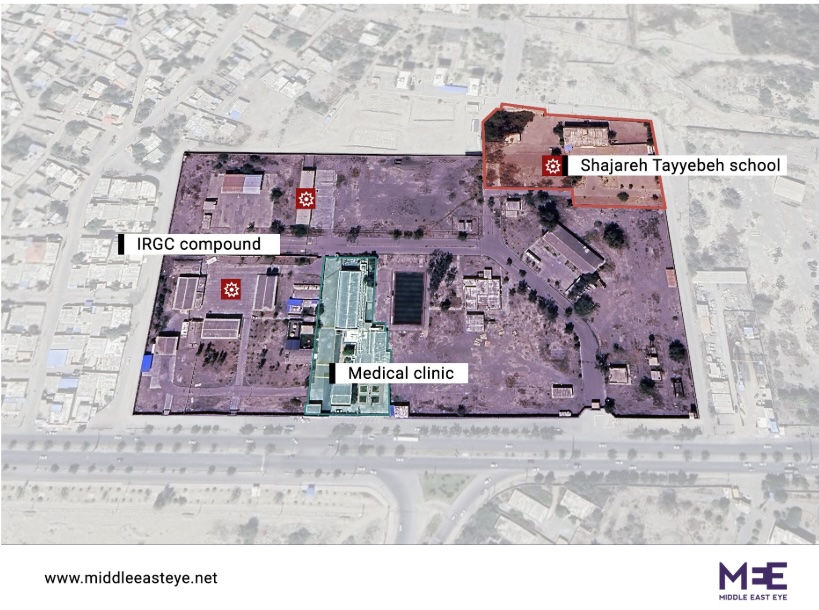
An Al Jazeera investigation concludes that while the site functioned as a military facility in 2013 (used exclusively as a military barracks with strict security characteristics and no evidence of civilian use), this situation changed in 2016. Satellite images dated September 6, 2016 show a major structural change, with internal walls constructed to fully separate the school building from the rest of the military complex.
Furthermore, Al Jazeera found that the school had been clearly separate from the adjacent military site for nearly a decade, raising questions questions about the accuracy of the intelligence on which the bombing happened.
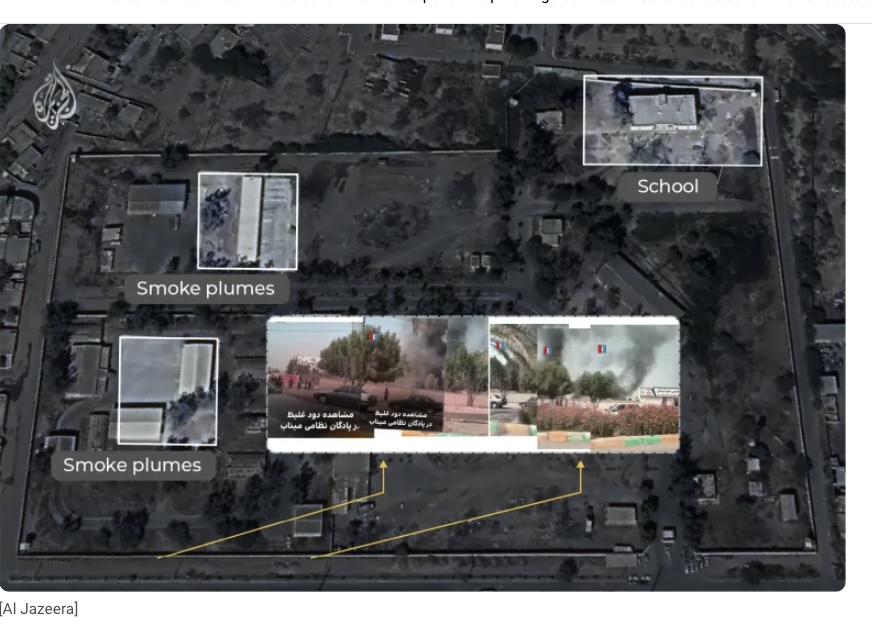
To determine the nature of the strike, Al Jazeera’s Digital Investigations Unit analyzed two videos uploaded to Telegram shortly after the bombing and geolocated them using visible landmarks and satellite imagery. The first video, filmed southwest of the complex, shows smoke rising from inside the Sayyid al-Shuhada military base (Asif Brigade), confirming that the military base itself was struck.
The second video, filmed from the southeast of the complex, shows two distinct columns of dense black smoke rising simultaneously, one from within the military base and another from the geographically separate location of the girls’ school.
The visible distance between the two smoke columns corresponds with the separation of the two sites in satellite imagery. Based on this evidence, Al Jazeera’s investigation concluded that the school was not damaged by debris or shrapnel from the adjacent base, but was instead struck separately.
The investigation further identified two possible explanations: either the strike resulted from reliance on outdated intelligence databases, or the school itself was deliberately targeted.
Nonetheless, CBC’s investigation presents the strike as a definitive conclusion, that the damage resulted from a precision airstrike on a military complex adjacent to the building, despite credible investigative evidence raising serious doubts about this claim.
According to the Canadian Association of Journalists (CAJ) Ethics Guidelines, journalists must ensure reporting is accurate, fair, and complete, and must not present unsubstantiated claims as established fact when credible evidence suggests otherwise.
CBC must correct its coverage immediately by clarifying that:
- the school had been physically separate from the adjacent military site for nearly a decade; and
- credible investigations indicate that the school has been struck directly rather than damaged by debris from a nearby strike.
Anything less knowingly allows misinformation to persist in the public record. Canadian readers deserve better from a public broadcaster.