
Your article provides eight instances of Israeli denials of violations, giving a platform to an accused criminal state to defend itself at great length. Meanwhile, it provides little detail on the extensive evidence of war crimes and the "catastrophic conditions" that led the UN's top court to issue its ruling.
 To the Editors,
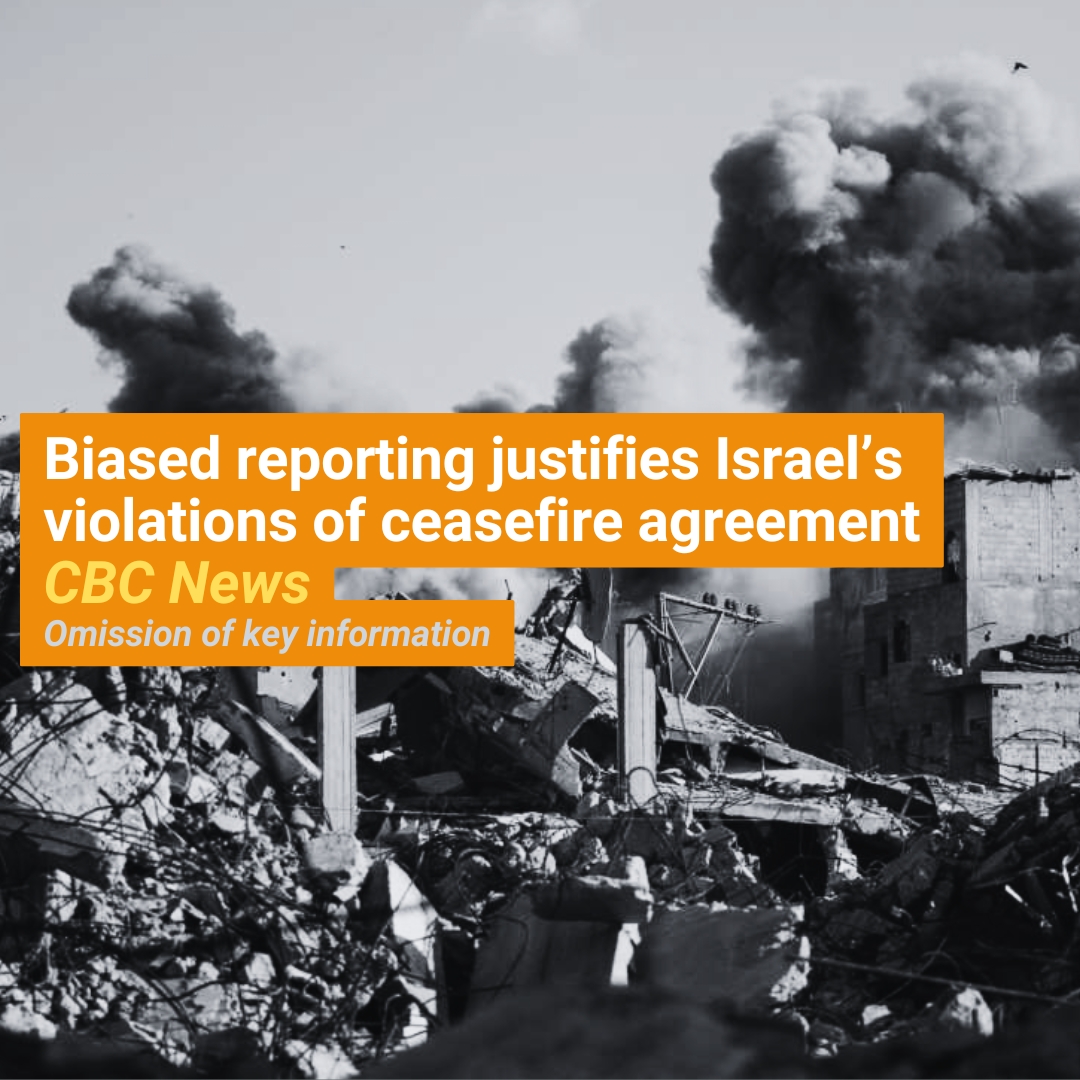
I am writing to express my profound disappointment with the biased and unbalanced reporting in your article, "UN's top court says Israel must allow aid into Gaza" (Oct 23, 2025). The article repeatedly favours the Israeli government's narrative while failing to provide crucial context or counter-evidence, effectively providing justifications for ongoing violence.
My concerns are focused on two key sections of the article.
First, the framing of the ceasefire's collapse is deeply problematic. The article states the "shaky truce was tested... after Israeli forces launched a wave of deadly strikes, saying Hamas militants had killed two soldiers." This uncritically presents the Israeli claim as the definitive reason for the escalation without proof.
However, this framing is highly contested. Hamas’s armed wing, the Qassam Brigades, has clarified that their fighters had no contact with Israeli forces in the Rafah area, which is under Israeli control. It was later clarified that the explosion that killed the soldiers was caused by an Israeli settler bulldozer running over unexploded ordnance.
By presenting only Israel's claim as fact without this critical counter-narrative, your reporting blames Hamas for breaking the ceasefire when other evidence suggests Israel used this claim as a pretext to carry out strikes across Gaza.
Furthermore, the article fails to provide balanced reporting by omitting Palestinian statements on Israeli violations. For instance, the Government Media Office in Gaza stated that Israel had violated the deal 80 times, killing at least 97 Palestinians. A harrowing example was the Israeli military firing on a civilian vehicle in the Zeitoun neighbourhood, killing 11 members of the Abu Shaaban family—including seven children and three women—as they tried to reach their home.
Omitting such crucial context whitewashes Israel’s consistent violations of the ceasefire deal. I urge CBC to move beyond simply parroting the narrative put forward by Israel as a pretext to break agreements and kill more Palestinians.
Second, the article’s handling of Israeli criticism of UNRWA is equally unbalanced. It notes that Israeli leaders "claim the organization is deeply infiltrated by Hamas," and that "UNRWA rejects that claim." This creates a false equivalence. Israel has provided no public proof for this serious allegation, which is precisely why the UN and the International Court of Justice have rejected it and called for UNRWA's aid work to proceed.
Your article provides eight instances of Israeli denials of violations, giving a platform to an accused criminal state to defend itself at great length. Meanwhile, it provides little detail on the extensive evidence of war crimes and the "catastrophic conditions" that led the UN's top court to issue its ruling.
This reporting is both biased and unbalanced. You should either give more credence to the findings of international law or stop giving such prominence to Israeli statements, which have been proven false time and time again.
As a public broadcaster, CBC has a responsibility to provide rigorous, contextual, and impartial journalism. This article falls short of that standard. I urge you to amend the piece to reflect a more balanced and evidence-based account of these events.
Sincerely,
Nikki Mutch
Media Advocate
Canadians for Justice and Peace in the Middle East